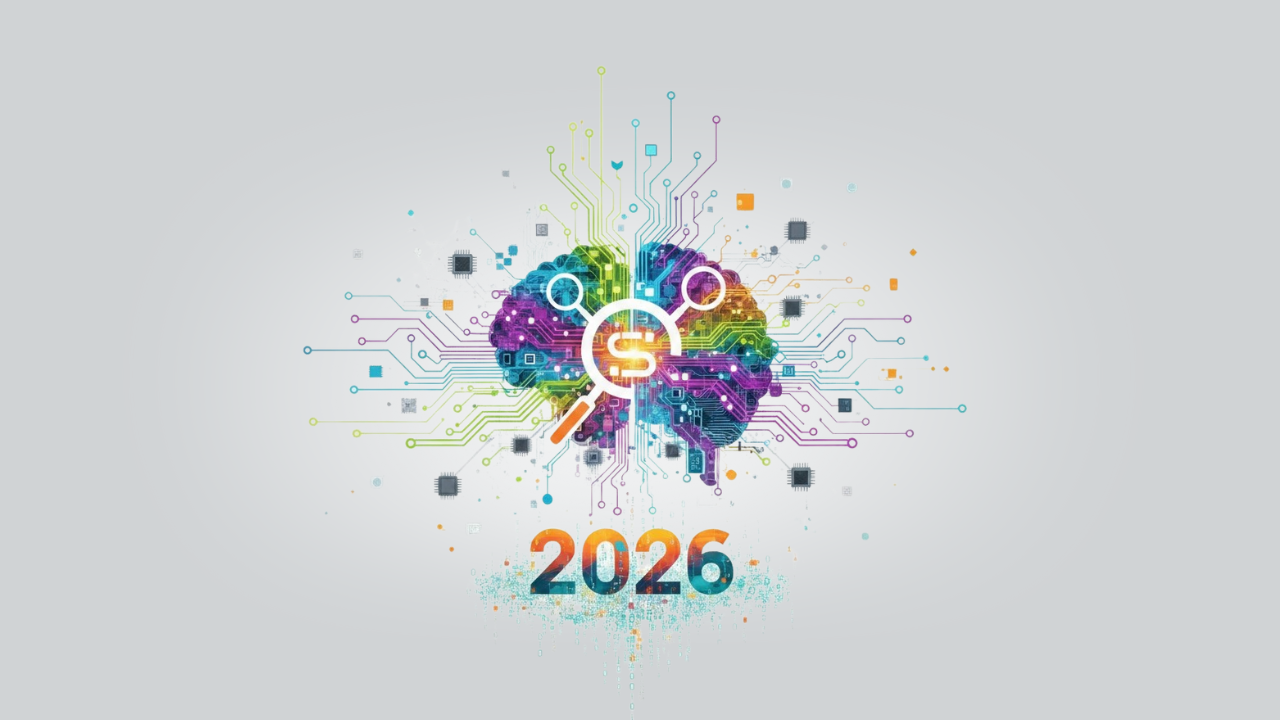
The past decade has seen search engines undergoing major changes, but still, the one coming in 2026 is going to be the biggest. Artificial Intelligence is no longer merely a factor in the future; it is already the principal force behind the evolution of the search engines. AI’s major and wide-ranging role will entail, for instance, understanding the user’s message with almost the same accuracy as a man and creating unique search experiences among others. The ranking, finding, and assessing of websites will all be influenced by AI technology in the end.
This transformation leaves nothing but a complete overturn of the SEO strategies for businesses and website owners. What was good for yesterday may not be valid for tomorrow, and that what works in 2026 will be linked very closely to how well your site is able to communicate its worth to the very sophisticated AI-driven systems.
We will go through the topic of AI redefining the SEO of search engines in 2026, the changing of ranking factors, the emergence of new opportunities, and how to prepare brands in this blog.
1. The Evolution Toward AI-Native Search Engines
The machine learning models are gradually being adopted by the ranking systems already in use by search engines such as Google, Bing, and in newer AI-search platforms. But the year 2026 is a turning point:
What are the changes going to be?
Search engines will be transformed into intent-prediction engines that provide results based on the users’ intentions rather than queries.
The algorithms are going to be built around LLMs and Multimodal AI, not statistics only.
The device will factor in live data, the actions of the user, and the understanding of the situation to provide extremely accurate responses.
Artificial intelligence will give every user a different rating, which implies that the search results will not be identical for any two individuals.
This change will lead to SEO methods giving less importance to keywords and more to semantic depth, user experience, brand authority, and intent alignment.
2. AI-Driven Ranking Factors That Will Dominate 2026
The algorithms of search engine will be in 2026 based on signals that are of a deeper nature and smarter ones that have been powered by AI. These signals will judge a website’s quality using human-like reasoning rather than through keyword-matching.
2.1 The prediction of user intents becomes the primary factor in ranking
AI is able to comprehend:
Search requests made in a lengthy and thorough conversational manner
Feeling intent (for example, urgent, informative, and comparing)
User’s situation judged by his/her browsing history, device type and user habits
Anticipated next action such as buying, checking, moving, etc.
Therefore, sites that provide thorough and satisfactory answers will get the first places in the queue, whereas the others will be left to the last places based on keyword density alone.
2.2 Behavioral Metrics Get Smarter
AI will also study:
Scrolling behavior
Cursor movement patterns
Repeated visits
Content reading speed
Multi-tab browsing habits
All those behavioral signals will let the AI know whether or not your page actually satisfies users, well beyond bounce rate or time-on-page metrics.
2.3 Quality of Content Will Be Evaluated by AI Like a Human Expert
Search engines will rely on LLMs to assess content based on the following criteria:
Depth
Accuracy
Expertise
Freshness
Topical relevance
Real-life value
AI-generated content that is thin, repetitive, or generic will be severely punished.
2.4 The Authority of the Entity Will Rank Higher Than the Domain Authority
Not only a webpage will a search engine see your business as an “entity” and assign it an authority status of the domain or even higher.
In 2026, the algorithm will take into account:
Brand mentions
Topical authority clusters
Industry expertise signals
Citation validation
Author authenticity
Context from external platforms
If your brand becomes an authoritative “entity”, Google will consider your site as more trustworthy than before.
2.5 Visual & Voice Search Optimization Become a Part of the Core Algorithm
AI will be able to understand:
Images
Videos
Graphical cues
Voice search queries
Multimodal content combinations
To keep up with the competition, websites have to do the optimization for not only the text but also for the visual and spoken formats.
3. Hyper-personalized search results
No two users will see the same search results page, and by 2026, personalization is expected to reach its most advanced level
What will decide the factors that determine the search results of a particular user?
Geographical place down to the tiniest spots
Traces of past searches
Use of different gadgets and software
Buying habits
Interactions with the content
Behavior at the moment
Major life changes (e.g., moving, taking care of health, financial transition)
This calls for a shift in SEO strategy from global rankings to optimizing for audience clusters.
4. AI to Transform Website Crawling and Indexing
Crawling websites using outdated traditional methods is going to be things of the past. Algorithms of 2026 will:
✔ Crawl Websites As If They Were Being Read by Humans
AI will have the ability to comprehend:
Content structure
Way of moving through the site
Page role
Emotion
Visual context
Instead of reading the code, AI will read the meaning.
✔ Index Pages Based on Semantic Value
Not every page will be included in indexing. Pages with little value or duplicates will be automatically removed—no manual penalties will be enforced, just the system working.
✔ Dynamic Indexing
The search engines will re-index the crucial pages every day and reduce the importance rate of the irrelevant ones right away.
5. AI-Powered Penalties Will be Stricter and Instant
The real-time analysis of AI over billions of data points will lead to a quicker, more accurate, and more difficult-to-avoid penalty process. Areas with a high risk of being targeted for penalties in 2026 will consist of the following:
AI content generation overuse
Keyword stuffing
Fake reviews
Unnatural backlinks
Content farms
Poor-quality web pages
Manipulative schema tactics
Plagiarism and content similarity clusters
AI can reveal the patterns that even the most experienced human reviewers cannot see, therefore, the risk of using black-hat SEO techniques is the highest it has ever been.
6. The Rise of AI-First Search Platforms (The Google Alternatives)
In 2026 the following platforms will dominate:
AI Search Assistants (ChatGPT Search, Perplexity, Gemini)
Voice-first search engines
Visual search engines
AI-driven discovery tools in social media platforms
People will have less waiting time as these platforms give user-friendly answer summaries instead of long lists of links.
The question then arises how does this impact SEO?
You should be ready to deal with:
Featured AI outputs
Summary results
Zero-click answers
Conversational SEO
Data-driven snippets
Now, the goal is to be mentioned in the AI’s generated responses, not just to be ranked in the traditional search engine results pages.
7. On-Page SEO in 2026: What Must Change?
On-page SEO in 2026 will need to be the most flexible and rightly coupled with the new time standards.
✔ Use Conversational, Complete, and Contextual Content
The content should cover the following questions:
What?
Why?
How?
Real examples
Future relevance
Evidence and actionable insights
✔ Add Multimedia Context
Different methods have to be used for presenting AI models:
Add videos
Add diagrams
Add high-quality images
Include audio explanations (if possible)
Add interactive elements
Use structured headers with semantic meaning
✔ Optimize for Voice & AI Queries
The queries to be made in the future will be like:
“What is the best SEO strategy for a small business in 2026?”
“Explain the role of backlinks in ranking local businesses.”
“Give me a comparison of AI SEO tools.”
Your website should incorporate not only keywords but also phrases that sound natural in conversation.
8. Off-Page SEO in 2026: The New Rules
Backlinks will remain important, but the whole process of assessing them will be transformed.
✔ 8.1 Contextual Backlinks > Quantity
AI will be able to find out:
If the site giving the link is relevant to the topic
If the mention is positive or negative
If the writer is a well-known author
How deep the context is around the anchor
✔ 8.2 Brand Mentions Become a Top Signal
Brand mentions all over the internet, even without backlinks, will help with ranking.
✔ 8.3 Social Signals Will Be Measured by AI
Likes would not be the only thing considered, but also the following:
Quality of engagement
Who the commenter is and what his/her opinion is
How authoritative the creator is
How deep the content is
Trends in the social realm
✔ 8.4 AI Will Evaluate Review Authenticity
The process of filtering fraud reviews would be done instantly with the help of both behavioral and pattern recognition methods.
9. Technical SEO in 2026: The New Requirements
To accelerate the content understanding process of AI, the websites have to be technically perfect in every aspect.
The main issues are:
The Core Web Vitals are unbelievably fast
The schema markup is completely prepared for AI
HTML is semantically clear
There are no problems with rendering JavaScript
A mobile-first conversational UX is an option
Making use of internal linking maps is efficient
Server uptime is high
There are AI-friendly APIs for sharing data
Technical SEO will be the main factor in the situation when the AI development and understanding are happening.
10. How Businesses Can Prepare Now (2024-2026 Action Plan)
This is the way to a future-proof SEO roadmap.
✔ Step 1: Build Topical Authority
Develop deep content clusters around your niche:
Pillar pages
Articles on subtopics
FAQs
Case studies
Tutorials
Comparison guides
✔ Step 2: Humanize AI Content
AI can assist in the creation of large volumes of content—but the final product still needs to be humanhearts and minds-edited and enriched with the author’s experience.
✔ Step 3: Invest in Strong Brand Building
The brand signals will take over in the contest with backlink signals and win out at the end.
✔ Step 4: Improve UX & Interactivity
The users’ engagement is the new currency.
✔ Step 5: Enhance E-E-A-T
Demonstrate:
Your credentials
Your expertise
Your real-world experience
Author bios
Industry certifications
✔ Step 6: Diversify Search Platforms
Make the following optimizations:
For AI search engines
For social search
For voice search
✔ Step 7: Build Multimedia Content Libraries
AI will give preference to the variety of content formats.
Conclusion
The Future of SEO in 2026 Is AI-Driven, Intent-Focused & Experience-Based
AI will not replace SEO—it will reshape it. Search engines in 2026 will be:
More intelligent
Quicker
More aware of the context
More tailored to the user
More critical of the quality of content
Those brands that embrace AI-friendly SEO strategies at present will be able to enjoy the benefit of being on top of the competition for several years.
If your company is determined to survive and prosper in the new AI-driven search period, you have to revise your strategy right now—before the algorithm does it for you.
To stay ahead in the AI-driven search era, brands must adopt AI-friendly SEO strategies today. If you want expert guidance on future-proofing your SEO, explore the resources and services at virtualassistantseo.com