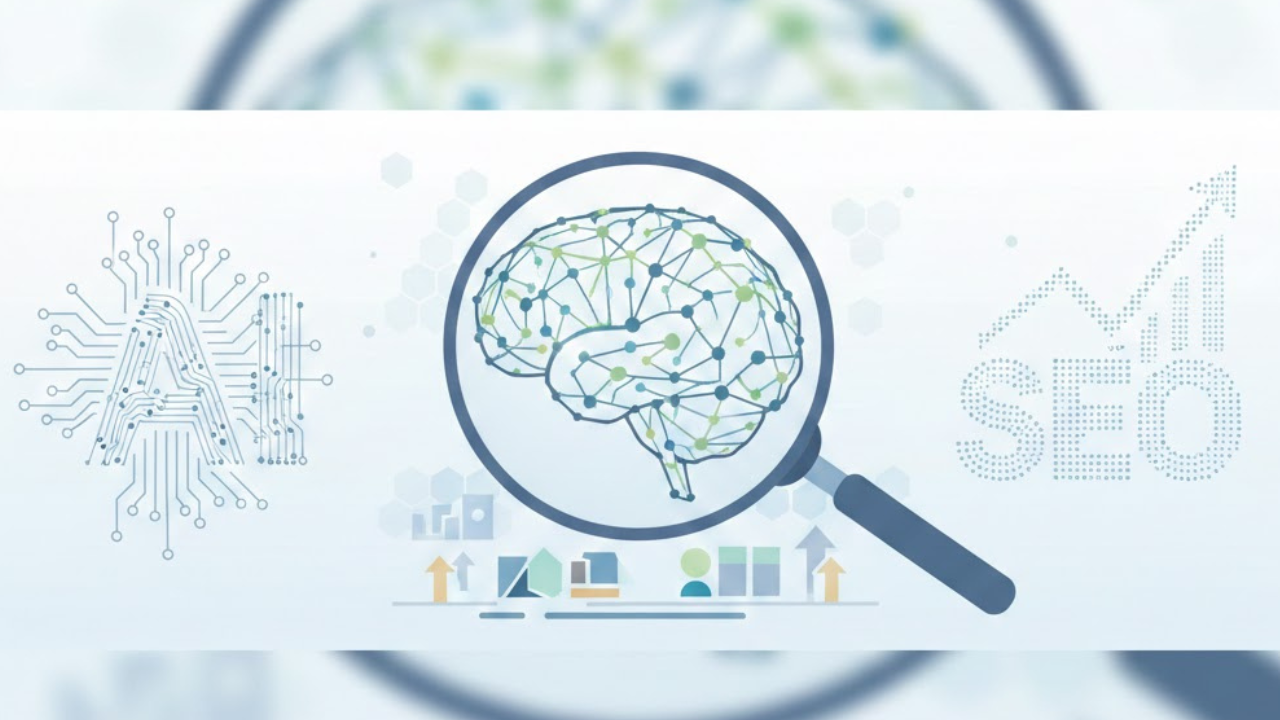
The pace of change in search over the past five years has been faster than in two decades combined. To the extent that Google is now employing AI-powered semantic search, it is allowing it to go beyond just keyword matching. The search engine is figuring out context, recognizing user wants, analyzing entities, and even the users’ latent desires, predicting what they would want— even if they have not articulated it fully.
To do this, brands, SEOs, and digital marketers need to alter their perception of search and adapt their strategies. This transition very much governs the world of visibility and is hence forth through the optimization of semantic relevancy, topical profundity, and intent-first search patterns.
This tutorial will unfold the very mechanism of AI semantic search and precisely how to maintain your website at the top rank for the intent-driving queries in 2025 and afterward.
What Is AI Semantic Search?
Semantic search is Google’s capability to grasp meaning—not just the actual words typed in the search box.
Google’s semantic search works more like the human brain rather than a dictionary. It is analyzing:
-
The word’s interrelation
-
The query’s context
-
The user’s behavior and want
-
Entities and concepts rather than keywords
-
Search history, patterns, and preferences
Natural language processing (NLP), machine learning, and large language models all contribute to AI semantic search, which enables Google to “read” content as humans do.
The key elements that support semantic search are:
1. Natural Language Understanding (NLU)
Google gets the real meaning of a query, even if the phrase is unclear or partly expressed.
2. Search Intent Classification
Queries are specified in terms of intents that correspond to four types (informational, transactional, commercial, and navigational).
3. Entity Recognition
Google distinguishes among concepts, brands, locations, people, and topics—collectively termed as “entities”—to comprehend the situation better.
4. Contextual Matching
Rather than giving importance to exact keywords, Google gives importance to the topics, subtopics, and phrases that are semantically and related to each other.
5. Personalized Relevance
The search results are modified according to the user’s activity pattern, type of device, place, and search history.
In short: Google is more concerned about relevance than keywords—and more about meaning than matching.
The Importance of Intent-First Optimization Today
In AI-based search systems, search intent has become the most important factor in determining the ranking of the result.
When Google successfully decodes the user’s need, it can provide quicker and keep the user in the Google environment through AI snapshots, quick snippets, and knowledge panels that are faster and more attractive.
If your content only partially covers the intent, you will face the following consequences:
-
Losing visibility due to AI-generated summaries
-
Lower rankings even with good keywords
-
Being out of enriched SERP features
On the contrary, when your content addresses the intent deeply and semantically, Google gives you:
-
Better visibility in SERPs
-
Being included in AI Overviews / featured snippets
-
Ranking improvement for long-tail and conversational queries
-
Organic authority increase
Intent-first SEO is the rule of modern search that cannot be skipped.
Optimizing Pages for AI-Powered Search Systems
AI and semantic search optimization involves systematic and practical ways of ensuring your pages are SEO-friendly.
The very first thing that is required is the following:
1. Intent Instead of Keywords
The traditional SEO mentality is that the beginning of the process is through a list of keywords.
On the other hand, the new approach of Semantic Search focuses on the consumer’s wants. User intents can be mapped to each keyword, and these include:
-
Informative: Users seek answers, definitions, or explanations.
-
Commercial: Users are interested in making a comparison, evaluation, or research of solutions.
-
Transactional: It is the case that users want to buy.
-
Navigational: The users want to go to a specific brand or page.
Do not just support the phrase, but support the whole intent behind it with the content.
For example, if we have the keyword “AI content optimization tools”:
-
The Information-seeking user intends: to get acquainted with the tools available and their workings.
-
The Commercial intent: to find the best tools to compare.
-
The Transactional intent: to locate the best tool for buying.
When you correspond to the intention behind the search query, your material becomes inherently pertinent and is therefore easier to rank.
2. Create Pages Rich in Entities and Focused on Topics
Entities are the main factor for search engines now rather than keywords.
Entity refers to something such as:
-
A human being
-
A corporation
-
A method
-
A process
-
A product
-
A subject
For good positioning, your content will have to cover:
-
Semantic relationships
-
Connected entities
-
Variations of concepts
-
Contextual background
Example:
The topic is AI Semantic Search, and the connected entities could be as follows:
-
NLP (Natural Language Processing)
-
Vector search
-
Knowledge graphs
-
Machine learning (training data)
-
LLMs
-
User intent
-
Definitions
When your webpage comprehensively discusses a subject along with the inter-linked entities, Google treats your content as the only one broadcasted and of increased ranking capacity.
3. Use Semantic Keywords and Co-occurrence Phrases
Modern SEO has moved away from the ever-so-popular primary keywords to rely on LSI and semantic variations, such as:
-
Related questions
-
Synonyms
-
Conceptual matches
-
NLP-recognized topic terms
You can find a way to use these naturally by:
-
Answering sub-questions
-
Using conversational phrases
-
Covering supporting topics
-
Giving examples and explanations
When Google happens on a plethora of semantically related words, it interprets your content as not being shallow or one-sided but rather intent-complete.
4. Structure Content for Semantic Readability
AI models decypher structure just like humans do.
What is the implication of this is that your content needs to be orderly, layered, and coherently connected.
Structure with:
-
Well-defined H1/H2/H3 hierarchy
-
Progressive explanation (basic → advanced)
-
Long, informative paragraphs
-
Transition phrases to keep the flow
-
Bullet points for clarity wherever necessary
-
Subheadings based on questions
Consider your content as a guidebook—not a randomly scattered collection of keyword placements. The more your structure is clear, the easier it becomes for AI to comprehend.
5. Optimize for Conversational and Long-Tail Queries
Natural language is the new trend of keyword search while voice search and AI chat windows are the main contributors to this trend.
Example:
In the past people used to type in: “semantic search SEO”
But now they ask:
“How do you optimize content for semantic search?”
In order for you to be on top of this search behavior, you can:
-
Include FAQs
-
Focus on “how”, “why”, and “what” questions
-
Use natural conversational language
-
Write full question-style headings
The less formal and straightforward the queries, the more worthy your content becomes of:
-
Featured snippets
-
AI Overviews
-
People Also Ask
-
Voice search results
6. Build Topical Authority Through Cluster Content
Topics that Google recognizes as expert by the web sites get rewarded that do not overtake the subject.
This can only be achieved through organization of the contents into clusters:
A content cluster consists of:
-
A singular and comprehensive pillar page
-
Several supplementary articles
-
Internal links among them
-
Full coverage of the underlying topics
Semantic search treats this strategy as:
“The website has a profound knowledge of the topic.”
In case your niche is SEO you may sort out your clusters as:
-
Semantic SEO
-
On-page optimization
-
AI SEO tools
-
Keyword intent analysis
The richer your topical map the higher your general authority.
7. Improve Context With Internal Linking
Semantic internal linking aids the search engines in discerning:
-
How topics relate to one another
-
The hierarchy of pages
-
How deep the content is
-
Signals indicating relevance
Make use of internal links to:
-
Establish connections between related entities
-
Strengthening the context among pages
-
Directing users to the content of the next step
Properly done, internal linking enhances both user experience and semantic clarity.
8. Optimize Content for AI Overviews and Featured Snippets
If you want to be part of AI snapshots and featured snippets, your content needs to:
-
Be organized in such a way as to provide quick answers
-
Have a summary with rich details underneath
-
Employ structured paragraphs that are LLM-friendly
-
Start with answer-first explanations
Recommended practices:
-
Include a “summary box” or key takeaways section
-
At the beginning, concisely answer the main question
-
Use numbered lists when explaining processes
-
Offer factual, verifiable, and high-quality information
The aim is to make your content the least difficult for Google’s AI to extract, summarize, and feature.
9. Enhance E-E-A-T Signals
AI semantic search judges the creators’ credibility of the content.
To bolster E-E-A-T:
-
Insert author bio sections
-
Reveal qualifications, experience, and skills
-
Use trustworthy references
-
Present case studies, examples, or demonstrations
-
Protect precision and clarity of facts
-
Insert schema markup (Article, Author, FAQ, How-To, etc.)
Google is keen to showcase the work of professionals, not the hidden or low-trust websites.
10. UX and Engagement Signals to be Improved
AI assesses the user engagement rates to see if the content has met its purpose or not.
Enhance:
-
Readability (short paragraphs, neat formatting)
-
Page loading speed
-
Making the site mobile friendly
-
Users’ interaction (videos, visuals, clickable summaries)
Longer user stay and higher interaction rates send a message to Google that your page is more relevant.
Impact in the Future: AI’s Ongoing Influence on Search
Only semantic search is the start.
AI-powered search will be able to:
-
Individualize results according to each user
-
Implement predictive browsing
-
Produce real-time answers
-
Perform analysis on multilayered content (text, video, images)
-
Be quite dependent on vector databases and embeddings.
The change signifies that the ranking process has transformed from a keyword war to an information, structure, and intent satisfaction delivery contest.
In the upcoming decade, search engines will resemble AI assistants rather than traditional query engines.
Final Thoughts: Winning in the Era of AI Semantic Search
In 2025 and beyond, the top positions in the search results will be the outcome of a complete changeover in the keyword-first to intent-first SEO strategy.
To be the winner:
-
Get the user better than your rivals
-
Give depth, clarity, and semantic context
-
Establish topic authority instead of separate content
-
Enhance structure, internal linking, and user experience
-
Compose for humans—but also for AI models that are interpreting your content
AI semantic search favors the content that is complete, contextual, and user-oriented.
If you want an expert in intent-driven optimization, you will connect with— Virtualassistantseo where you don’t only rank—you will rule your niche.